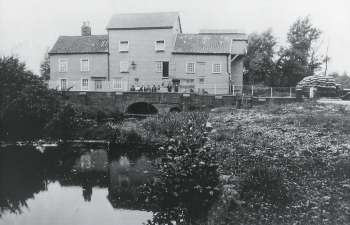
 |
|
c.1946
|
|
Loddon Mill
River Chet |
|
|
c.1946
|
|
Although Domesday
listed a mill at Loddon it would have almost certainly been on a different
site. Loddon watermill was sometimes known as Chedgrave mill and is one of the earliest recorded buildings in the town. |
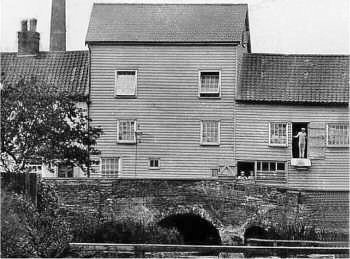 |
|
c.1900
|
|
When the mill was built it was found that the best position for the mill involved diverting the river Chet to the south of its natural course. This involved considerable effort and expense and it has been noted that in times of severe flood the river will attempt to flow via its original channel. The name Loddon translates as muddy river in the Celtic language. |
 |
 |
|
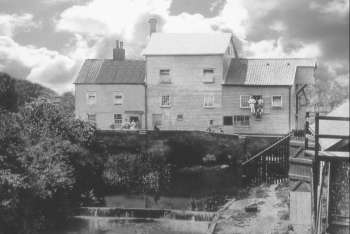
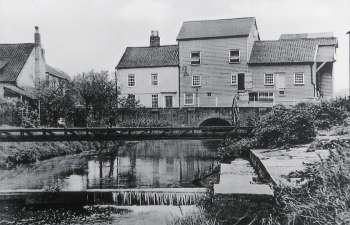
1900
|
c.1932 |
 |
c.1940 |
| 1584 the will of Robert Poole, miller NCC |
| his will was dictated - he gave his sowle into the hands of God, his bodie to be buried, all his goods to be divided into 3 parts that every one of his children might have a like part. Present were Roger Medley & John Rixe Administration was granted to his 2 sons John Poole & Robert Poole He was buried in Loddon on 25th October 1584 |
|
2 Octer, 2nd Chas. I., 1626. |
Loddon, &c. - Bargain and sale by Anthony Hobart, Esqre, of Hales Hall in Loddon, to Henry Best, of Norwich, gentleman, of a water mill and mill house, &c., and an acre of meadow in Loddon, and the site of the manor of Ludden Bacon's alias Loddon Bacon's alias Bacon's Hall in Loddon, otherwise called the Manor Manor yards in Loddon, containing thirty acres and three roods, and the Fair kept in Loddon on the eve of St Martin, in the winter, with the tolls, proffits, &c. : an acre of land in Costinvickes, and twenty-four acres of marsh in Hadiscoe,-R. 57b, in d,1 |
| 1706 summary of the will of Henry Hunt, miller of Loddon |
. . . As to my worldly estate I will devise order & dispose thereof in manner & form following (That is to say) First I give & bequeath unto Ann Mingay & Elizabeth Mingay my grandchildren £20 apiece to be paid at or in the church porch of Mettingham in the county of Suffolk respectively at their several aged of one & twenty years Nevertheless it is my will & intent that if either of them shall depart this life before she shall attain the age aforesaid not having issue of her body lawfully begotten Then I will & my mind is that the said Twenty pounds as aforesaid given to her that shall soe depart this life as aforesaid shall be enjoyed by the survivor of them at such time as she so dyeing should have been paid the same. Item I give & bequeath unto Elizabeth Loonckin my grandchild other twenty pounds to be paid to her at the place of payment aforesaid at her age of one & twenty years Nevertheless my will & intent is that if the said Elizabeth Loonckin shall depart this life before she shall attain her age aforesaid not having issue of her body lawfully begotten Then I will that the said legacy given to the said Elizabeth Looncklin (Hoonchin) shall cease & be void Item I give to Ann my eldest daughter the wife of Richard Mingay & to her heirs All my Messuage & all & singular my lands & Tenements as well copyhold as freehold situate lying & being in Mettingham with their appurtenances upon condition that she my said daughter or her heirs or some or one of them doe & shall not onely pay or cause to be paid to my said three grandchildren their said several legacies of twenty pounds apiece at their several ages of one & twenty years in manner & form above expressed And it is my will & intent that if default shall happen to be made in payment thereof or any part thereof contrary to the true intent of me herein expressed That then & from thenceforth & as often as it shall so happen or be it shall & maybe lawful to & for my said three grand children either or any of them & to & for their several Executors Administrators or Assigns being unpaid the same or any part thereof contrary to this my Will to enter into all & singular my said Messuages land Tenements & premises given my said daughter as aforesaid with appurtenances or into any of them & the same to have hold & enjoy until by the rents & profits thereof she they & every of them being so unpaid shall be fully satisfied her & their several legacies aforesaid & all her & their reasonable costs & damaged that shall be sustained by means or occasion of such non payment but also my mind & meaning is that my said daughter & her heirs some or one of them out of my said Messuage land & tenements do & shall at or in any place of payment aforesaid well & truly pay & cause to be paid into the proper hands of Elizabeth Looncklin/Hooncklinmy youngest daughter one annual sum of four pounds during the natural life of the said Elizabeth by four equal portions in every year that is to say upon the twenty fifth day of March the twenty fourth day of June the twenty ninth day of September and the twenty fifth day of December the first quarterly payment to begin upon such of the said days as shall come next after my decease for & as a separate maintenance provision & benefit to her & whereof or wherewith I will her present husband shall have no manner of benefit or intermeddling provided always & it is my will & meaning further that in case my said eldest daughter or her heirs or some or one of them shall not well & truly pay or cause to be paid etc and she makes a lawful demand then as often as it shall happen I devise limit & appoint all my aforesaid messuages etc in Mettingham unto Mr Robert Woods Sen. of Loddon & John Spall of Ellingham in Norfolk my friends & to their heirs etc ......to ensure that the youngest daughter receives her annuity etc Item I give my said youngest daughter all such goods as Alice Hunt my mother in law has in occupation & are to come to me at her death as Executor of Henry Hunt my late deceased father yet if the said Alice shall survive me I will my Executors shall lend unto my said youngest daughter until the death of the said Alice a feather bed & such other things as shall be necessary her a room fit for her condition which if she shall not restore again to my Executors at the death of the said Alice Hunt in good repair I will she shall not have the goods I have given her as aforesaid Moreover I give her my said youngest daughter to be paid into her pp hands for her separate use twenty shillings to be paid within a week after my decease Item all the rest of my goods Chattels & personal Estate I give wholly & solely unto the said Ann my eldest daughter & do make her & the said Richard Mingay her husband Executors of this my last will & Testament And I do revoke & make void all former Wills & Testaments by me made In Witness whereof to this my last will & Testament I have put my hand & seal this ninth day of July in the year of our Lord Christ one thousand seven hundred & three. Henry Hunt was not buried in Loddon |
An Inventory of the goods & chattels of |
|
| In the dwelling house of the party deceased In the kitchen Three old tables 1 form 6 chairs 2 stools 1 old cold for pewter 1 old screen 1 salt box Earthen pottery 1 brush & 4 candlesticks 1 pair of Andirons 2 pairs of tongs 1 firepan 2 gridirons 2 hakes a chafing dish a chopping Knife 2 spits a flesh fork 1 cliver 2 smoothing irons & heaters 4 iron skewers 1 slice a pair of bellows one Gun & a coal cradle & toasting iron 6/- 15 pewter dishes & the rest of the pewter Together by weight 54 pounds One brass pot one brass kettle3 skillets & a pair of old books |
00 - 16 - 00 00 - 15 - 00 |
| In the Lodging room where he died The wearing apparel of the deceased One bed as it stand 4 leather chairs a cupboard 1 spice box & a warming pan |
£5 - 00 - 00 |
| In the Buttery adjoining the said room One iron kettle 1 frying pan 2 iron pots 4 beer vessels 1 powdering tub 1 kneading killer (keeler) 2 beer stools a dripping pan 2 dozen & a half of trenchers & 3 shelves a sieve & . several wooden dishes & earthen pots & pans & glasses bottles there |
£00 - 16 - 00 £1 - 00 - 00 |
| In the Brewhouse One Copper as it hangeth A mash tub 1 other brewing tub , bucking Stand 7 killers 2 pails 2 other tubs 3 Bowles a half barrel a funnel a wash Basket a hook a hatchet a fork a rake A stool a peel a coal rake & a hairing line |
£1 - 10 - 00 £1 - 10 - 00 |
| In the Chamber over the said kitchen One bed as it stand 4 chairs 1 table with a drawer 1 chest 2 coffers Keeping the household linen of the deceased viz A pair of sheets & an odd one & the rest of his household linen valued together at |
5 - 00 - 00 |
| In the Chamber next adjoining One bed as it stands 1 chair 1 stool 2 old trunks & 2 coffers |
£2 - 00 - 00 00 - 08 - 00 |
| In the Garrett One bed as it stands A parcel of old iron with the lumber there In corn in the said chamber & in the chambers of Peter Critoft & Richard Goodwyn viz 50 combs of wheat 7 combs of Rye 2 bushels of barley 3/- 1 dozen of corn sacks 12/- |
£25 - 00 - 00 £2 - 10 - 00 |
In the Water mill A parcel of old iron with the Lumber there |
£3 - 09 - 00 00 - 10 - 00 |
| £65 - 02 - 06 | |
| In the stable A parcel of hay 2 horses 1 bridle & saddle together at In the yards & grounds one plough & pair Of harrows as they go The several & remaining husbandry tools Wood & firing |
5/- |
In the Windmill of the deceased In lumber about the said house yard & mills In ready money In debts good & bad |
19/- 23 - 14 - 00 |
| William Shreeve Richard Bretton Appraiser |
|
1749 22 April Manor of Loddon Bacons A Special Court |
Baron of Stephen Gardiner Esq Lord of the Manor held at his Dwelling House in his presence ..... at the Request of Thomas Rayner Miller |
|
Bacons Manor Court roll 1775 Nov 22 |
this Manor by the Rod All his Messuages Lands & Tenements and Hereditaments whatsoever holden of this Manor by copy of Court Roll To the use of & Behoof of his last Will and Testament declared or to be declared And at this Court it is presented by the Homage thereof that the said Thomas Rayner died since the last General Court Baron held for this Manor and before this Court seized of and in divers Lands & Tenements holden of this Manor by Copy of Court Roll Now to this Court comes Elizabeth Rayner widow and Relict of the said Thomas Rayner in her own proper person and produced here in Court the last Will and Testament of the said |
|
It is presented by the Homage of this Court and Testified by William Holmes Gentleman Deputy Steward of the said Gardiner Harwood known Steward of the said Manor and the Courts thereof lawfully authorized by Virtue of a Deputation under the Hand and Seal of the said Gardiner Harwood bearing Date the ninth day of December Instant That on the on the Fifteenth Day of December Instant Richard Bowen of Norton Subcors in the County of Norfolk Bricklayer and Elizabeth his Wife she the said Elizabeth being a Copyhold tenant of the said Manor came before the said Deputy Steward(She the said Elizabeth being first safely and separately examined apart from her said Husband after thereto freely and voluntarily consenting as the Law required) and out of Court according to the Custom of the said Manor Did surrender out of their and each of their Hands into the Hands of the Lord and Lady of the said Manor by the Hands of the said Deputy Steward by the Rod in the Person and Testimony of Edward Mickleburgh a Credible Person Witnessing the same All and every the Messuages Lands Tenements and Hereditaments whatsoever of the said Richard Bowen and Elizabeth his Wife and of each and either of them holden of the said Manor by Copy of Court Roll with their and every of their Rights Members Appurt . . . |
|
Elizabeth Bowen was buried in Norton Subcourse on 23rd December 1783, aged 59, wife of Richard Bowen, late widow of Thomas Rayner née Elizabeth Nollorth. |
|
One of the earlier known millers was William Burton snr who was born in Colton c.1774 and was left money by his maternal grandfather to pay for his apprenticeship. He first married Sarah King but there are virtually no known details of this liason. On 17th May 1813, he married his second wife Mary Rush in Loddon. William and Mary had eight children - Sarah Ann Burton bapt 8th July 1803; William Burton bapt 5th May 1803 (died soon after birth); William Burton jnr bapt 27th June 1809 Loddon; Esther Burton born c.1823 Loddon. |
|
A very good WATER-MILL, WIND-MILL, DWELLING HOUSE, and about nine Acres of Land, at Loddon, in Norfolk. - The Situation of above Water-mill is so well known, that it is needless to point it out to the Public. |
|
To be SOLD |
|
To be SOLD by AUCTION |
|
1787 Nov 15 after the death of Elizabeth three proclamations were made at the Court asking for her heirs |
|
Thomas Horth's son, John of Thorpe, gentleman, appears at the following Loddon Bacons Manor Court Court held 22nd October 1789 to present his father's will: First I do hereby subject and charge my Water mill and all my Messuages Lands tenements and Herditaments as well copyhold as freehold in Loddon in the County of Norfolk to and with the payment of 12/- to Ruth my Wife on the Monday of every week during her Natural lifetime . . . subject to the weekly sum of 12/- to my said Wife during her life I Give and devise these unto John my son and to his Heirs and Assignes.. John begged admission to the property |
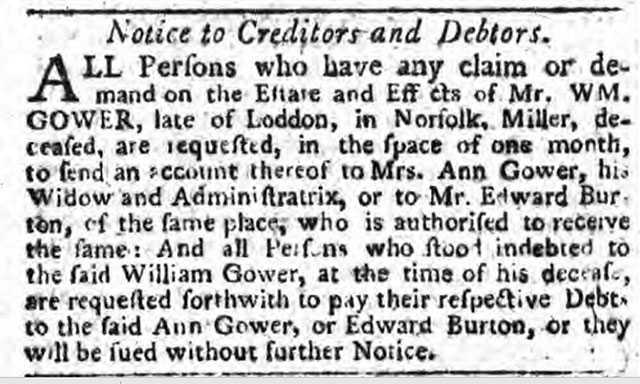 |
Norfolk Chronicle - 3rd June 1797 |
|
William Gower was buried in Loddon on 2nd October 1796 aged 23. |
|
In 1798 a Land Tax to help His Majesty amounting to £2.12.6d |
|
It is presented to the Homage of this Court that on the eighteenth day of June in the year of our Lord 1802 John Horth of the City of Norwich Upholsterer a Copyhold tenant of this Manor came before William Forster the Younger Deputy Steward of the said Manor and of the Court thereof And out of Court according to the Custom of the Manor Did surrender by the Rod out of his hands into the hands of the of the Lord of this Manor by the hands of the said Deputy Steward (in the presence and testimony of William Marshbank Gentleman a credible person attesting the same All and every the Messuages land Tenements and hereditaments whatsoever of him the said John Horth holden of the Manor by Copy of Court roll with their and every of their appurtenances etc etc |
|
By 1808 the Kerrison family of bankers, lawyers andn land owners had financial problems and Lord of the Manor, Roger Allday Kerrison was declared Bankrupt. The Newspapers reported the bankruptcy and announced the sale of property. |
NORFOLK MANORS, ESTATES &C Lot 8. A dwelling House, and substantial Water Mill and |
|
Lot 8 |
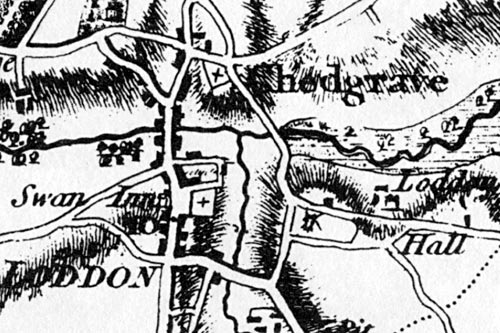 |
Faden's map 1797 |
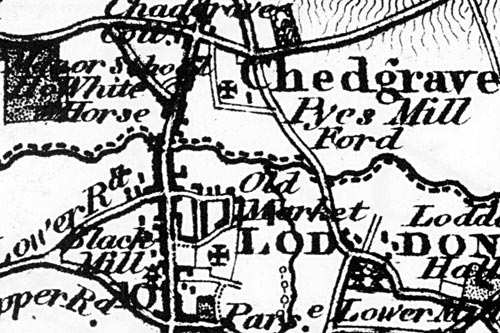 |
Bryant's map 1826 |
Tithe Award 1841 |
|||
No. 423 |
House Watermill & yards |
|
Pt. £1. 4. 9 to Vicar |
William Burton snr. died in 1852 and is buried at Loddon beside 2nd wife Mary and 2 daughters Martha and Esther. William left instructions that both the towermill and the watermill along with the land should be sold with £1,000 to be invested in government stock |
|
LODDON MILLS |
LODDON |
TO BE LET ON LEASE from April the 6th, 1853, a A BRICK_TOWER-MILL and a WATER MILL, with Dwelling-house, Barn, Stable, and about Ten Acres of LAND. Each Mill drives two pair of stones. - Application to be made by letter, stamped and directed to A.B., to be left at the Post-office, Loddon. Norfolk News - 8th January 1853 |
Jonathan Feltham took over the watermill and the towermill in 1853 but preferred use a manager at the watermill, rather than run it himself. He possibly called on Michael Hardy, journeyman Miller who the 1861 census records as living in Chedgrave Street and 60 year old journeyman Thomas Napp jnr living next door. Thomas Napp snr was miller at the Mill Road postmill until 1809. |
SITUATIONS VACANT To Millers WANTED, a steady active married Man to see after a small Water Mill and make himself generally useful. Apply to J. Feltham, Loddon Mill Norfolk News - 5th October 1861 |
| To Millers WANTED, a steady respectable Man that has a good knowledge of his Business. Apply to J. Feltham, Norwich Corn Hall. Norfolk News - 15th June 1872 |
| Situations Vacant TO MILLERS Wanted, a steady honest Married Man to take the General Work of a small Water Mill. Apply to J. Feltham, Loddon Mills or at Corn Hall, Norwich. Norfolk News - 16th October 1875 |
| FELTHAM Jonathan Personal Estate under £3,000. |
17 August. The Will of Jonathan Feltham formerly of Loddon but late of Sizeland both in the County of Norfolk Miller and Farmer who died 7 July 1878 at Sizeland was proved at Norwich by Mary Ann Feltham of Sizeland Widow the Relict the surviving Executor. |
Jonathan Feltham , born 4th June 1820, died on 7th July 1878, aged 58 |
Jonathan Feltham, Deceased. Notice re claim on Estate of Jonathan Feltham formerly of Loddon & late of Sizeland, Miller & Farmer, who died on or about 7 July 1878, to Surviving Executor, Mary Ann Feltham; will proved 17 August 1878. Overbury & Gilbert, Solrs. to said Executors. Norfolk Chronicle - 10th April 1880 |
 |
|
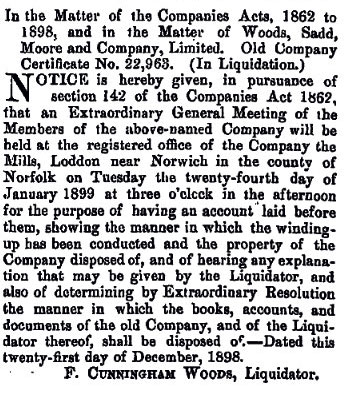
London Gazette - 23rd December 1898 |
Arthur Charles
Sadd b.1854 Henstead, Suffolk, was one of the founders of Woods, Sadd, Moore & Co. Ltd. and in 1901 was living lived at The Beeches, Loddon. He was
married to Anna Ellen Cross born c.1857 Hatherleigh, Devonshire. |
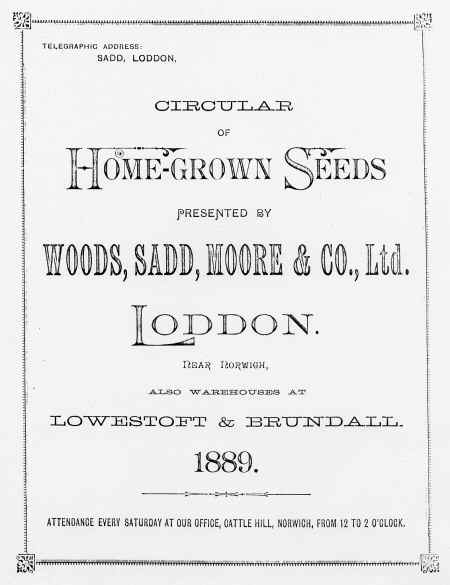 |
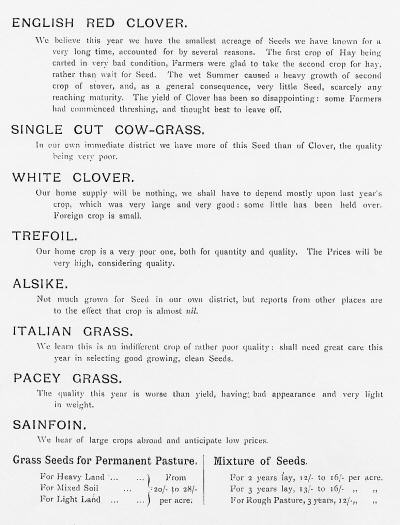 |
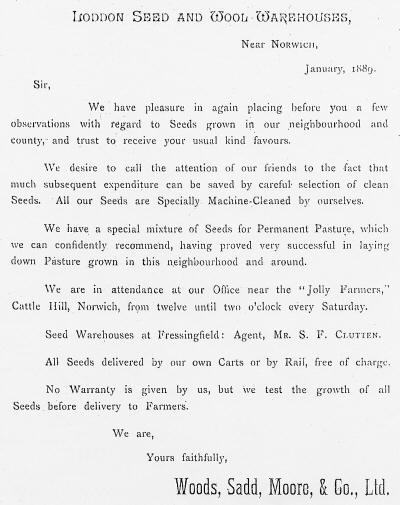 |
 |
c.1900 |
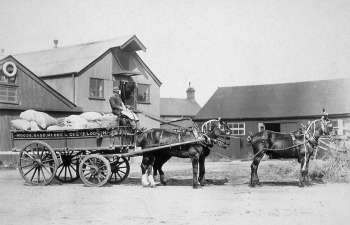 |
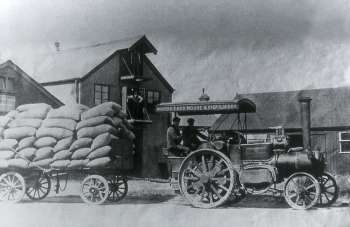 |
|
Woods, Sadd, Moore & Co's horse waggon c.1905 |
Woods, Sadd, Moore & Co's traction engine in 1905 |
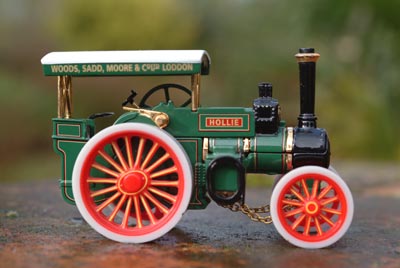 |
Model of Woods, Sadd, Moore & Co's traction engine in 2005 |
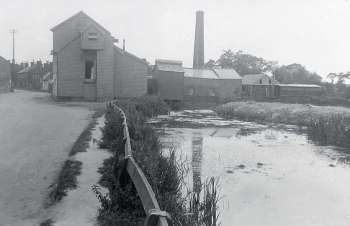 |
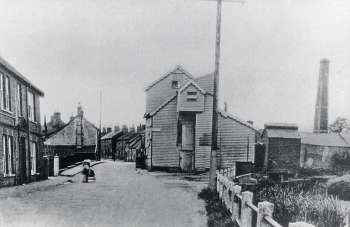 |
|
c.1908 |
c.1910 |
Two early pictures taken from the Chedgrave side. Both show the 'smut box' just to the right of the mill, this filtered out the chaff etc. from the air, like an extractor fan. The steam engine house and its chimney are set further back. On the left of the right hand photo is the HQ of Woods, Sadd, Moore & Co. Ltd. |
 |
|
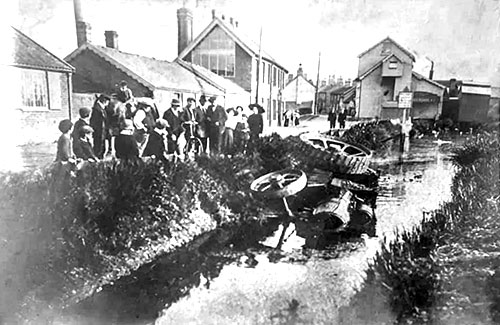
Traction engine in the River Chet c.1912
|
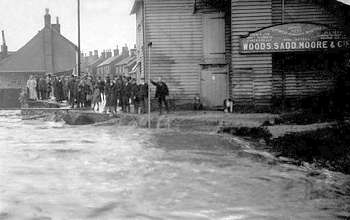 |
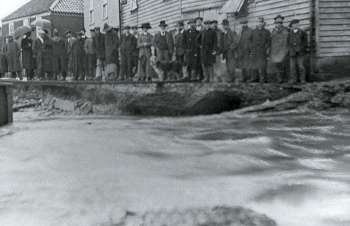
27th August 1912 |
 |
 |
|
27th
August 1912
|
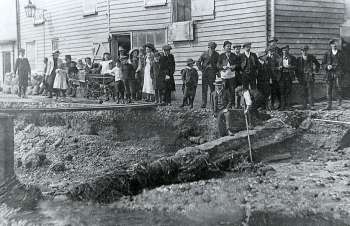
27th
August 1912 with the auger casing exposed |
 |
|
Crowd watching - 27th
August 1912
|
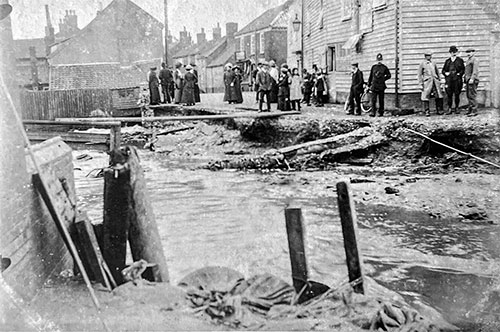
The great flood
that took place after torrential rain on 27th and 28th August 1912 devastated
the area around Loddon along with the rest of Norfolk. At about midnight
on the 27th a section of the roadway next to the mill was washed away and
part of the bridge caved in soon afterwards. The mill itself was in serious
danger of collapse as more and more of the road and bridge beside the mill
were washed away. A gang of 40 men worked to try and preserve as much of
the area around the mill's foundations as possible and succeeded in saving
the mill. |
|
Soon after
Woods, Sadd, Moore & Co. took over in the late 1880s they installed
a coal fired steam engine and a roller mill, although the stones remained
for grist grinding. At this time sacks of grain were carried on men's
shoulders from the four granaries on the north bank of the river. It was
soon realised that this method was far from ideal and so a worm conveyor
(auger) was installed, passing under the road to connect the mill with
the granaries. This required the construction of an elevator within the
mill building that in turn meant raising part of the roof at the north
end of the mill. The auger casing is clearly seen in photos of the 1912
floods that washed much of the road away. |
|
Woods, Sadd,
Moore & Co. used wherries for transporting various commodities along
the navigable section of the Chet and together with Case & Steward
(corn & seed merchants) were responsible for dredging the river to
improve navigation to the staithe. Woods, Sadd, Moore & Co. built
up a fleet of Norfolk wherries including the Benjamin, Orion, The Lowestoft
Trader and Ursa Minor. They also had three iron wherries, the Sirius,
Uranus and Vega. Their sails were removed after the first world war and
they were then towed by tugs. |
|
The wherries brought in a variety of products. Coal came in from Yarmouth and was graded before being sold in Loddon and the surrounding area for 1/- or 1/1d per cwt. |
 |
|
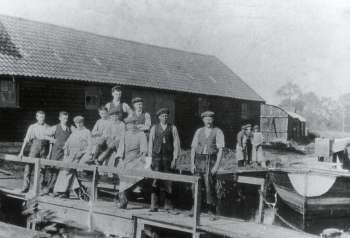
WSM's workmen at the staithe c.1920 |
|
In 1928 the mill was finally converted to electricity and used to husk trefoil, a type of clover that was brought in from Essex, Hertfordshire and Suffolk. The ground husks were quality inspected under a microscope to ensure the seed had not been chipped, otherwise it would not grow. The seeds were mainly exported to Germany where they were planted to produce animal feed and act as a legume crop to increase the Nitrogen content of the soil. Woods, Sadd, Moore & Co. became the largest red clover (trefoil) dehusking plant in the country. |
 |
|
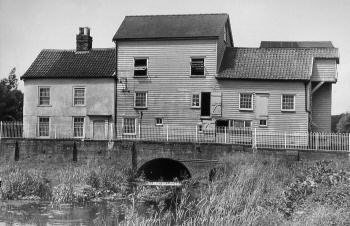
Tailrace
in 1953
|
 |
|
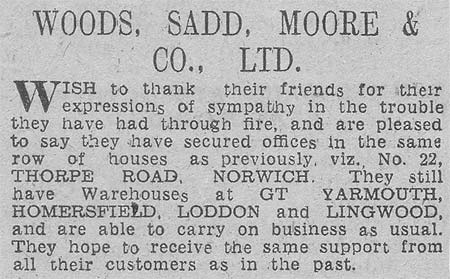
East Anglian Times - Monday August 3rd 1942
|
My grandfather Henry Edwin Sadd was a partner in the firm Woods Sadd Moore & Co Ltd along with his brother Arthur Charles Sadd. |
 |
 |
|
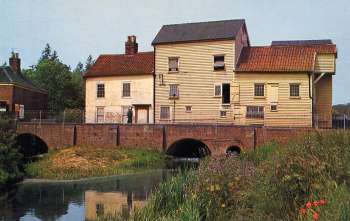
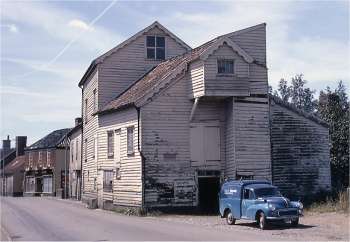
Early 1960s |
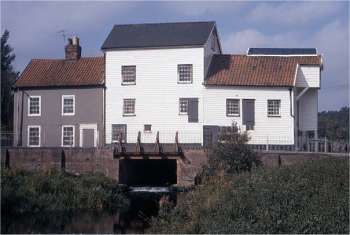
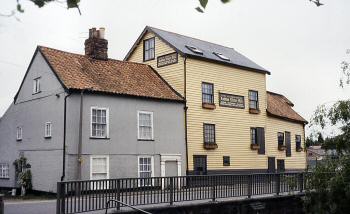
Early 1960s |
 |
 |
|
October
1970
|
Mill
house and restaurant c.1977 |
|
The mill carried on with grist and small scale flour production along with the dehusking of an annual crop of trefoil until 1968, when it was closed and sold by the Gilberts of Chedgrave Manor Estate. It's new owner decommissioned it but quickly agreed to reconnect the electricity supply and rent the mill out on a temporary basis when the new season's crop of trefoil suddenly arrived. |
 |
|
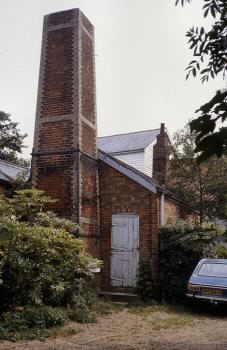
The
truncated steam chimney
27th July 1983 |
|
LODDON MILL |
|
This is an old cornmill, distinctively
clad in white boarding standing over the River Chet in Loddon, ten miles
south of Norwich. Loddon has become a centre for boating enthusiasts and
is developing in popularity.
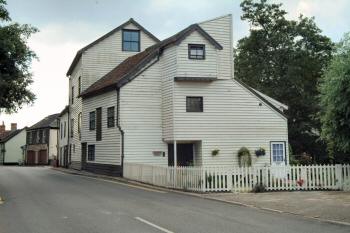
The mill consists of a four-storey wooden-clad building on four floors, with a slated roof and mill race below. It is offered as it stands, including all the original machinery and equipment. The brick boiler house at the rear is not included in the sale and is in separate ownership, as is the cottage to one side. The ground floor areas are approximately as follows: GROUND FLOOR Main room 48' x 20' plus two or three smaller rooms, w.c. FIRST FLOOR 30' 6" x 25' and 22' 8" x 14' average SECOND FLOOR 26' x 20' THIRD FLOOR 26' x 20' OUTSIDE A small triangular piece of land suitable for parking three or four cars N.B. A free public car park is immediately opposite. Planning consent has been obtained for restaurant use on two floors and for the retail sale of antiques from the property. Detailed drawings have not been made, the application for consent was in outline only. The price for the freehold with vacant possession is:- |
|
£14,000, good offers considered.
|
| The key may be obtained from this office by prior arrangement Mills Warner & Coe - Property Particulars, 1st July 1975 |
|
After standing
empty and deteriorating for a time, the mill was externally repaired and
repainted in 1970. |
 |
 |
|
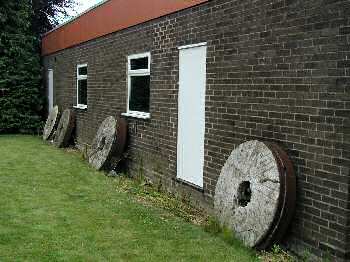
2
pairs of original French burr stones 18th June 2003
|
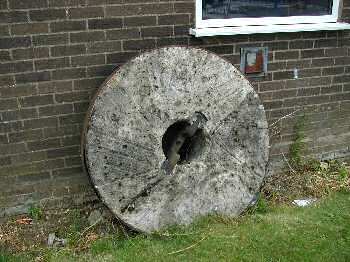
Runner
stone |
|
The two pairs of stones pictured above were plated W. J. & T. Child. Makers. Hull & Leeds. |
|
I was on holiday in the broads 12 years ago my friend
and I were looking round the mill, it was a wednesday morning, there was
a husband and wife working there and a man working up in the attics. I
was with my friend Lindsay and we were shown to the toilets next to the
restaurant (It was closed). The light bulb had gone in the ladies so we
were asked to use the gents, I turned my back to look at a picture (few
seconds) I turned round to see a man in grey trousers and a blue shirt
with the sleeves rolled up walking DOWN the stairs waving. I did not see
his face but remember smiling to myself. |
|
I grew up in the 1930's and 40's frequently visiting my grandparents at Chedgrave Lodge, my grandfather Richard Sutton who built it in 1900, became director of Wood Sadd Moore who owned the mill at that time. I often went with him to the mill, when he visited and to this day I can recall the character of the noise the sacks and smell, a dusty sweet smell, and the staircases going up and up, and the cats, kept there to catch the vermin. All our surpless kittens went to the mills. One old cat we had was taken to Lingwood mill, after months she turned up back at our house having walked back from Lingwood to Gorleston where we lived. My father Alec Sutton grew up at Chedgrave Lodge and by the 1940's was a director of Wood Sadd Moore. I believe my grandfather worked for Cannells the seed merchants in Chedgrave firstly. |
|
I am the great granddaughter of Alfred Woods of Loddon, Lowestoft and Beccles. I saw the Mill some years ago when it was a restaurant and was shown over the building. My father, Francis Maitland Woods was the son of William Maitland Woods, the son of Alfred. He was named after his uncle, Francis Cunningham Woods. |
 |
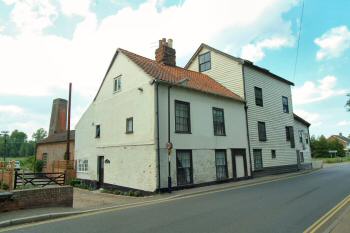 |
|
9th
September 2003
|
9th
September 2003
with the steam shed to the rear |
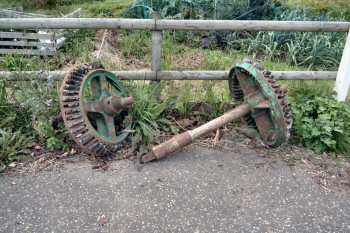 |
|
Wooden
toothed gearwheels beside the road 9th Sept 2003
|
| I am the great grandson of Alfred Woods. My grandfather, Alex Girvan, FRCS Edinburgh, married Alfred's daughter, Delia Woods, by whom he had a son, Ian Waveney Girvan, my father, who died in 1964. |
|
My name is Steven Pitcher and I have been a residant of Loddon most of my life, my story about Loddon mill took place around 1986/87, I am 33 now (Jan 2013) so I was about 7 or 8 years old. |
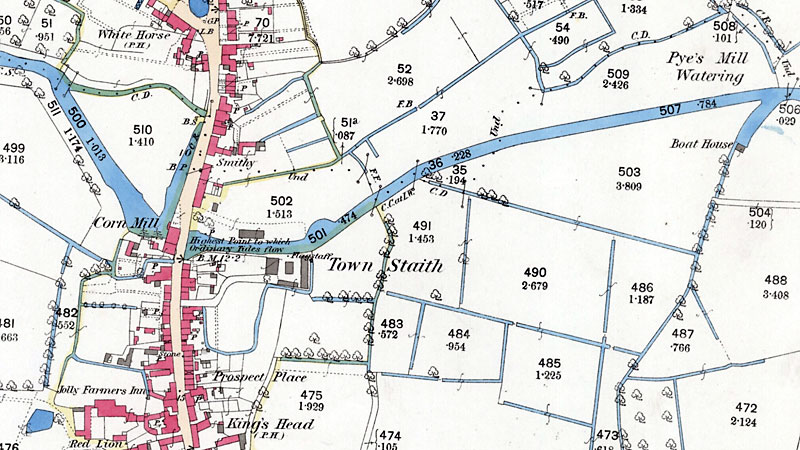 |
O. S. Map 1884 Courtesy of NLS map images |
The above map clearly shows the river above the mill taking a sharp turn to the southeast before flowing in a straight line to the mill. Prior to this new cut being made, the river's course was basically east to west and the new mill was built to the south of the original watercourse. Both Faden's map of 1797 and Bryant's map of 1826 show the river flowing along its original course with no mill. |
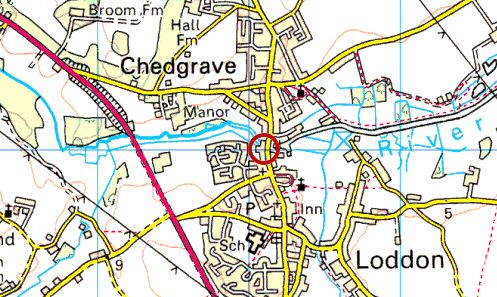 |
O.S. Map 2005 Image reproduced under licence from Ordnance Survey |
Norfolk Chronicle 1795: William Gower listed as agent for The Norwich General Assurance Office
|
| 1584: Robert Pole, miller, died
White's 1845: William Burton, corn miller - also at Mill Road towermill
O.S. map 1884: Corn Mill
1898: Woods, Sadd, Moore & Co. Ltd. in liquidation
8th December 1912: Alfred Woods (previously Court Dressmaker) died
Kelly's 1925: Woods, Sadd, Moore & Co. Ltd., barley & seed merchants
1928: Mill converted to electricity and used to grind trefoil Kelly's 1933: Woods, Sadd, Moore & Co. Ltd., barley, seed & wool merchants
Kelly's 1937: Woods, Sadd, Moore & Co. Ltd., barley, seed & wool merchants
1947: Woods, Sadd & Moore ceased malting operations 1968: Mill ceased operation 1970: Mill externally repaired and repainted 14th April 1975: South Norfolk DC granted planning permission to convert the mill into a restaurant 1975: Norman Chalk and Neville Codling converted and then opened the mill as a restaurant 2003: Private dwelling and split into two separate residential units October 2004: Mill advertised for sale by Potter & Co. at a guide price of £249,000 for one of the two sections 2007: Mill being run as a wellbeing centre offering a variety of alternative medical remedies 2010: Andrew Walter, Mill House and 2 engine rooms at back of mill - hosting live comedy & arts events |
If you have any memories, anecdotes or photos please let us know and we may be able to use them to update the site. By all means telephone 07836 675369 or
|
| Nat Grid Ref TM 36139901 | Copyright © Jonathan Neville 2003 |